Watering should start immediately after transplanting. This helps the seedlings to establish well in the field and reduces transplant shock.
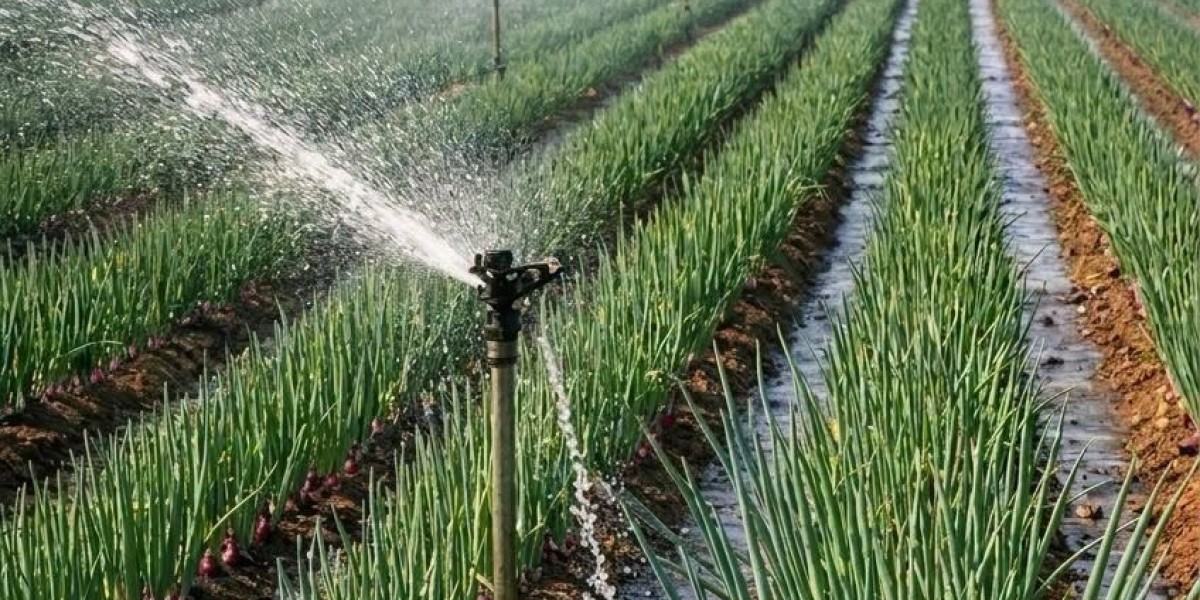
During early growth, onions require regular watering. In most conditions, irrigation is done every 3 to 4 days. In sandy soils, watering may be needed more often, about every 2 to 3 days, because water drains quickly. In heavier soils, irrigation can be less frequent, about every 5 to 7 days.
Water becomes most important during bulb formation. At this stage, the crop should not lack moisture. Regular watering should continue to ensure proper bulb development.
Irrigation should always be light and controlled. Heavy watering should be avoided because it can lead to waterlogging, which causes bulb rotting and increases disease problems.
As the crop approaches maturity, watering should be reduced. Irrigation should be stopped about 2 to 3 weeks before harvesting. This allows the bulbs to dry properly and improves their storage life.
Too much water leads to rotting, diseases, and poor storage quality. Too little water results in small bulbs and low yield.
Proper irrigation management ensures healthy plant growth, good bulb formation, and high quality onions.